
News United States
September 2010
News
September 2010
Caribbean storm dumps rain, eyes Florida, Sep 29,
2010
A tropical
depression in the Caribbean Sea brought heavy rains
early Wednesday to southern Florida after soaking
Cuba, Jamaica and the Cayman Islands.
The system
had top sustained winds near 35 mph and was expected
to strengthen into Tropical Storm Nicole later on
Wednesday, the U.S. National Hurricane Center said.
"The
depression is very near becoming a tropical storm,"
the center said in a 5 a.m. ET advisory.
Tropical
cyclones become named storms when their sustained
winds reach 39 mph (63 km per hour).
The system
was centered about 190 miles south of Miami and was
moving north-northeast at 14 mph/22 kph, the
Miami-based hurricane center said. It was expected
to move over the Florida Straits later in the
morning.
The storm
was projected to stay well clear of the Gulf of
Mexico, where U.S. oil and gas operations are
concentrated. The heaviest rains were on the east
side of the system, which would reduce the threat to
the central Florida orange groves.
The system
was not expected to strengthen beyond a minimal
tropical storm and forecasters predicted it would
dissipate into a wide blob of thunderstorms by the
weekend.
The main
threat was from flash flooding and mudslides. The
depression was expected to dump 5 to 10 inches of
rain in its path, including over the Cayman Islands,
Jamaica and Cuba.
A tropical
storm warning was in effect along the Florida
eastern coast, the Cayman Islands and parts of Cuba
and the Bahamas. A warning means tropical storm
conditions were expected between 12 to 24 hours.
Austin ranked sexiest city in U.S., Sep 16, 2010
New York, Las Vegas or
Los Angeles may seem like more likely choices but Austin, Texas has been named the sexiest city in the
United States in a magazine survey.
Austin, Texas has been named the sexiest city in the
United States in a magazine survey.
Dallas,
Houston and San Antonio also scored high marks in
the ranking by Men's Health Magazine that looked at
birth rates, condom sales, rate of sexually
transmitted diseases and sales of sex toys.
But
cold-weather cities, including Portland, Maine which
came in last and Burlington in Vermont, didn't do as
well.
"One
possibility is that in an area where's it's hotter,
people need to dress lighter and that puts pressure
on them to look better and keep in better shape,"
said Matt Marion, the deputy editor of the magazine.
Seven of the
15 sexiest cities in the poll of 100 urban areas
were in Texas. In contrast, New England, with its
freezing temperatures and parka-wearing populace,
was home to many of the least libidinous cities.
The finding
that amorous people tended to be more abundant in
warmer cities such as Charlotte, North Carolina and
Atlanta, contradicts the notion that sultry weather
makes people lazy and want to avoid physical contact
with others.
Some cities
renowned for their singles bars and hook-up scenes
were also low in the ranking. Las Vegas was No. 70,
followed by New York at 73, San Francisco at 74 and
Miami at 88, contradicting their reputations as
randy metropolises.
"They could
be having plenty of sex in Boston, San Francisco and
New York, but just less than in other places,"
Marion said.
Yonkers, in
New York, Charleston in West Virginia and
Manchester, New Hampshire were also at the bottom of
the list.
Gas blast engulfs neighborhood near San Francisco,
Sep 10, 2010
 A
fiery natural gas explosion ripped through a
residential neighborhood in a San Francisco suburb
on Thursday, ravaging some 50 homes and killing at
least one person, officials said.
A
fiery natural gas explosion ripped through a
residential neighborhood in a San Francisco suburb
on Thursday, ravaging some 50 homes and killing at
least one person, officials said.
As
many as 22 people were injured by the blast and
flames in San Bruno, a few miles (kilometers) from
the San Francisco International Airport, and were
taken to local hospitals and burn treatment centers.
The local coroner's office reported one fatality.
"We
have confirmed 53 structures have been severely
damaged, 120 more have fire damage," San Bruno Fire
Department Chief Dennis Haag told a news conference.
Most of the burned buildings were homes in the
densely populated residential area, officials said.
Television footage showed a massive fireball and
flames shooting skywards. Area residents said they
first thought the blast's loud boom was the result
of an earthquake or an airplane crash.
The
gas Line belongs to the northern California utility
Pacific Gas & Electric Co (PCG.N),
the company said in a statement.
"Though a cause has yet to be determined, we know
that a PG&E gas transmission Line was ruptured. If
it is ultimately determined that we were responsible
for the cause of the incident, we will take
accountability," the statement said.
The
explosion of the high-pressure gas Line came at rush
hour around 6 p.m. local time (0100 GMT on Friday)
and flames spread quickly due to high winds.
Television footage showed a massive fireball and
flames shooting skywards. Area residents said they
first thought the blast's loud boom was the result
of an earthquake or an airplane crash.
Water-dropping aircraft assisted 150 to 200
firefighters on the ground, whose work was made more
difficult by the intense heat and broken water
Lines.
"The fire is being contained at this point ... it is
around 50 percent contained," Haag said.
About 100 people were spending the night at an
evacuation center, he said.
California Lieutenant Governor Abel Maldonado,
serving as acting governor while Arnold
Schwarzenegger is on a trade mission to Asia,
declared a state of emergency to free up state
assistance for local government.
U.S. says not considering NATO Afghan troop request,
Sep 9, 2010
The United
States does not plan to contribute to a NATO request
for 2,000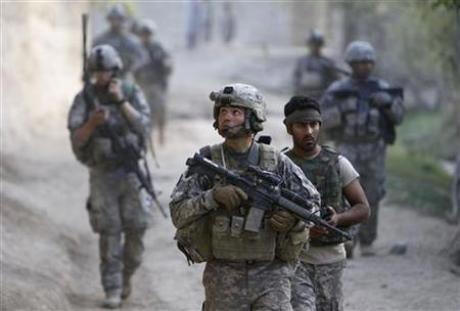 troops for the Afghan war, the Pentagon said on
Tuesday, even as the head of the alliance held out
the possibility of U.S. participation.
troops for the Afghan war, the Pentagon said on
Tuesday, even as the head of the alliance held out
the possibility of U.S. participation.
The NATO
commander in Afghanistan submitted a request last
week that alliance officials said called for another
2,000 soldiers, including 750 trainers.
Colonel Dave
Lapan, a Pentagon spokesman, said the request
referred to a long-standing NATO requirement
focusing on training Afghan forces.
Last year,
NATO allies failed to meet all NATO requests for
trainers and Washington temporarily deployed 850
troops to help fill the gap. Those soldiers are due
back in the United States this fall and no more were
being considered, Lapan said.
"We would
look for NATO to first fill that requirement," Lapan
told reporters at the Pentagon.
U.S. forces
count for 95,000 of the nearly 150,000 foreign
troops fighting the Taliban in Afghanistan.
NATO
Secretary-General Anders Fogh Rasmussen, speaking
earlier with reporters in Washington, said it was
still unclear where the extra soldiers would come
from and did not rule out the possibility that some
might be U.S. troops.
"The
composition of the 2,000 will very much depend on
the force generation process. So here and now I
don't know how many will be U.S., how many will be
other allies and partners," Rasmussen said when
asked how many might be U.S. troops.
"But in the
past we have succeeded to keep it as a broad
alliance mission and I expect that to continue."
President
Barack Obama ordered a "surge" of 30,000 additional
soldiers for the unpopular Afghan war last December
but said those forces would start withdrawing in
July 2011.
Any
additional increases could undercut that drawdown,
which supporters say conveys a needed sense of
urgency to ramp up Afghan security forces for an
eventual handover after nine years of war.
Critics say
the July 2011 date has backfired, sending a signal
that the United States is preparing to wind down at
a time when NATO forces are suffering record
casualties.
Rasmussen,
who later met Obama at the White House, said he
believed the July 2011 date fit into plans to start
gradually passing security responsibility to Afghan
forces next year.
But he
decLined to set a date in 2011 for the transition to
begin, saying it would depend on conditions on the
ground.
"It's a
clear military assessment that we can't do it this
year," Rasmussen said. "But based on the reports
that I have seen ... I find it realistic to start
the process next year."
Rasmussen
said he hoped to be able to make announcements "in
broad terms" at a NATO conference in Lisbon in
November about where in Afghanistan the transition
might start.
"We have to
make sure that we get conditions right before we
start this process because a transition to lead
Afghan responsibility should be irreversible," he
said. "We'll not be in a position to take
responsibility back afterwards. That would be a
disaster."
Hurricane Earl heads for U.S. east, islands
evacuated, Sep 1, 2010
Visitors and
some residents evacuated from low-lying vacation
islands off the North Carolina coast on Wednesday as
Hurricane Earl bore down on the U.S. eastern
seaboard, churning up dangerous swells.
Earl, still
a major Category 3 hurricane, weakened slightly
overnight but was on a track that could approach the
North Carolina coast by Friday morning, the U.S.
National Hurricane Center said.
Packing top
sustained winds of 125 mph, Earl was churning over
the open Atlantic. The hurricane was expected to
sideswipe the densely populated coast from North
Carolina to New England on a forecast northward
offshore path during the upcoming U.S. Labor Day
holiday weekend marking the end of the summer
vacation season.
This was
expected to bring driving rain, high winds and
pounding surf, but forecasters so far have not
predicted a direct hit on the U.S. East Coast.
North
Carolina's Dare County ordered the mandatory
evacuation of all visitors from Hatteras Island, a
popular picturesque vacation spot that draws large
numbers of tourists each year. Officials said high
waves striking the island could wash over the costal
highway, impeding safe travel.
Vacationers
and residents were also being evacuated from
Ocracoke Island, also on North Carolina's Outer
Banks that jut into the Atlantic Ocean.
At 8 a.m.
EST (1200 GMT), Earl was moving across the Atlantic
well to the east of the Bahamas and was located
about 780 miles south southeast of Cape Hatteras,
North Carolina, the Miami-based National Hurricane
Center said.
"Large
swells from Earl should affect the Bahamas and the
southeastern coast of the United States today
(Wednesday). These swells will likely cause
dangerous surf conditions and rip currents," the
center said.
Hurricane
Earl posed no threat to major U.S. oil and gas
installations in the Gulf of Mexico.
Austin, Texas has been named the sexiest city in the
United States in a magazine survey.Dallas, Houston and San Antonio also scored high marks in the ranking by Men's Health Magazine that looked at birth rates, condom sales, rate of sexually transmitted diseases and sales of sex toys.
But cold-weather cities, including Portland, Maine which came in last and Burlington in Vermont, didn't do as well.
"One possibility is that in an area where's it's hotter, people need to dress lighter and that puts pressure on them to look better and keep in better shape," said Matt Marion, the deputy editor of the magazine.
Seven of the 15 sexiest cities in the poll of 100 urban areas were in Texas. In contrast, New England, with its freezing temperatures and parka-wearing populace, was home to many of the least libidinous cities.
The finding that amorous people tended to be more abundant in warmer cities such as Charlotte, North Carolina and Atlanta, contradicts the notion that sultry weather makes people lazy and want to avoid physical contact with others.
Some cities renowned for their singles bars and hook-up scenes were also low in the ranking. Las Vegas was No. 70, followed by New York at 73, San Francisco at 74 and Miami at 88, contradicting their reputations as randy metropolises.
"They could be having plenty of sex in Boston, San Francisco and New York, but just less than in other places," Marion said.
Yonkers, in New York, Charleston in West Virginia and Manchester, New Hampshire were also at the bottom of the list.
Gas blast engulfs neighborhood near San Francisco,
Sep 10, 2010
A
fiery natural gas explosion ripped through a
residential neighborhood in a San Francisco suburb
on Thursday, ravaging some 50 homes and killing at
least one person, officials said.
As
many as 22 people were injured by the blast and
flames in San Bruno, a few miles (kilometers) from
the San Francisco International Airport, and were
taken to local hospitals and burn treatment centers.
The local coroner's office reported one fatality.
"We
have confirmed 53 structures have been severely
damaged, 120 more have fire damage," San Bruno Fire
Department Chief Dennis Haag told a news conference.
Most of the burned buildings were homes in the
densely populated residential area, officials said.
Television footage showed a massive fireball and
flames shooting skywards. Area residents said they
first thought the blast's loud boom was the result
of an earthquake or an airplane crash.
The
gas Line belongs to the northern California utility
Pacific Gas & Electric Co (PCG.N),
the company said in a statement.
"Though a cause has yet to be determined, we know
that a PG&E gas transmission Line was ruptured. If
it is ultimately determined that we were responsible
for the cause of the incident, we will take
accountability," the statement said.
The
explosion of the high-pressure gas Line came at rush
hour around 6 p.m. local time (0100 GMT on Friday)
and flames spread quickly due to high winds.
Television footage showed a massive fireball and
flames shooting skywards. Area residents said they
first thought the blast's loud boom was the result
of an earthquake or an airplane crash.
Water-dropping aircraft assisted 150 to 200
firefighters on the ground, whose work was made more
difficult by the intense heat and broken water
Lines.
"The fire is being contained at this point ... it is
around 50 percent contained," Haag said.
About 100 people were spending the night at an
evacuation center, he said.
California Lieutenant Governor Abel Maldonado,
serving as acting governor while Arnold
Schwarzenegger is on a trade mission to Asia,
declared a state of emergency to free up state
assistance for local government.
U.S. says not considering NATO Afghan troop request,
Sep 9, 2010
The United
States does not plan to contribute to a NATO request
for 2,000
troops for the Afghan war, the Pentagon said on
Tuesday, even as the head of the alliance held out
the possibility of U.S. participation.
The NATO
commander in Afghanistan submitted a request last
week that alliance officials said called for another
2,000 soldiers, including 750 trainers.
Colonel Dave
Lapan, a Pentagon spokesman, said the request
referred to a long-standing NATO requirement
focusing on training Afghan forces.
Last year,
NATO allies failed to meet all NATO requests for
trainers and Washington temporarily deployed 850
troops to help fill the gap. Those soldiers are due
back in the United States this fall and no more were
being considered, Lapan said.
"We would
look for NATO to first fill that requirement," Lapan
told reporters at the Pentagon.
U.S. forces
count for 95,000 of the nearly 150,000 foreign
troops fighting the Taliban in Afghanistan.
NATO
Secretary-General Anders Fogh Rasmussen, speaking
earlier with reporters in Washington, said it was
still unclear where the extra soldiers would come
from and did not rule out the possibility that some
might be U.S. troops.
"The
composition of the 2,000 will very much depend on
the force generation process. So here and now I
don't know how many will be U.S., how many will be
other allies and partners," Rasmussen said when
asked how many might be U.S. troops.
"But in the
past we have succeeded to keep it as a broad
alliance mission and I expect that to continue."
President
Barack Obama ordered a "surge" of 30,000 additional
soldiers for the unpopular Afghan war last December
but said those forces would start withdrawing in
July 2011.
Any
additional increases could undercut that drawdown,
which supporters say conveys a needed sense of
urgency to ramp up Afghan security forces for an
eventual handover after nine years of war.
Critics say
the July 2011 date has backfired, sending a signal
that the United States is preparing to wind down at
a time when NATO forces are suffering record
casualties.
Rasmussen,
who later met Obama at the White House, said he
believed the July 2011 date fit into plans to start
gradually passing security responsibility to Afghan
forces next year.
But he
decLined to set a date in 2011 for the transition to
begin, saying it would depend on conditions on the
ground.
"It's a
clear military assessment that we can't do it this
year," Rasmussen said. "But based on the reports
that I have seen ... I find it realistic to start
the process next year."
Rasmussen
said he hoped to be able to make announcements "in
broad terms" at a NATO conference in Lisbon in
November about where in Afghanistan the transition
might start.
"We have to
make sure that we get conditions right before we
start this process because a transition to lead
Afghan responsibility should be irreversible," he
said. "We'll not be in a position to take
responsibility back afterwards. That would be a
disaster."
Hurricane Earl heads for U.S. east, islands
evacuated, Sep 1, 2010
Visitors and
some residents evacuated from low-lying vacation
islands off the North Carolina coast on Wednesday as
Hurricane Earl bore down on the U.S. eastern
seaboard, churning up dangerous swells.
Earl, still
a major Category 3 hurricane, weakened slightly
overnight but was on a track that could approach the
North Carolina coast by Friday morning, the U.S.
National Hurricane Center said.
Packing top
sustained winds of 125 mph, Earl was churning over
the open Atlantic. The hurricane was expected to
sideswipe the densely populated coast from North
Carolina to New England on a forecast northward
offshore path during the upcoming U.S. Labor Day
holiday weekend marking the end of the summer
vacation season.
This was
expected to bring driving rain, high winds and
pounding surf, but forecasters so far have not
predicted a direct hit on the U.S. East Coast.
North
Carolina's Dare County ordered the mandatory
evacuation of all visitors from Hatteras Island, a
popular picturesque vacation spot that draws large
numbers of tourists each year. Officials said high
waves striking the island could wash over the costal
highway, impeding safe travel.
Vacationers
and residents were also being evacuated from
Ocracoke Island, also on North Carolina's Outer
Banks that jut into the Atlantic Ocean.
At 8 a.m.
EST (1200 GMT), Earl was moving across the Atlantic
well to the east of the Bahamas and was located
about 780 miles south southeast of Cape Hatteras,
North Carolina, the Miami-based National Hurricane
Center said.
"Large
swells from Earl should affect the Bahamas and the
southeastern coast of the United States today
(Wednesday). These swells will likely cause
dangerous surf conditions and rip currents," the
center said.
Hurricane
Earl posed no threat to major U.S. oil and gas
installations in the Gulf of Mexico.
troops for the Afghan war, the Pentagon said on
Tuesday, even as the head of the alliance held out
the possibility of U.S. participation.The NATO commander in Afghanistan submitted a request last week that alliance officials said called for another 2,000 soldiers, including 750 trainers.
Colonel Dave Lapan, a Pentagon spokesman, said the request referred to a long-standing NATO requirement focusing on training Afghan forces.
Last year, NATO allies failed to meet all NATO requests for trainers and Washington temporarily deployed 850 troops to help fill the gap. Those soldiers are due back in the United States this fall and no more were being considered, Lapan said.
"We would look for NATO to first fill that requirement," Lapan told reporters at the Pentagon.
U.S. forces count for 95,000 of the nearly 150,000 foreign troops fighting the Taliban in Afghanistan.
NATO Secretary-General Anders Fogh Rasmussen, speaking earlier with reporters in Washington, said it was still unclear where the extra soldiers would come from and did not rule out the possibility that some might be U.S. troops.
"The composition of the 2,000 will very much depend on the force generation process. So here and now I don't know how many will be U.S., how many will be other allies and partners," Rasmussen said when asked how many might be U.S. troops.
"But in the past we have succeeded to keep it as a broad alliance mission and I expect that to continue."
President Barack Obama ordered a "surge" of 30,000 additional soldiers for the unpopular Afghan war last December but said those forces would start withdrawing in July 2011.
Any additional increases could undercut that drawdown, which supporters say conveys a needed sense of urgency to ramp up Afghan security forces for an eventual handover after nine years of war.
Critics say the July 2011 date has backfired, sending a signal that the United States is preparing to wind down at a time when NATO forces are suffering record casualties.
Rasmussen, who later met Obama at the White House, said he believed the July 2011 date fit into plans to start gradually passing security responsibility to Afghan forces next year.
But he decLined to set a date in 2011 for the transition to begin, saying it would depend on conditions on the ground.
"It's a clear military assessment that we can't do it this year," Rasmussen said. "But based on the reports that I have seen ... I find it realistic to start the process next year."
Rasmussen said he hoped to be able to make announcements "in broad terms" at a NATO conference in Lisbon in November about where in Afghanistan the transition might start.
"We have to make sure that we get conditions right before we start this process because a transition to lead Afghan responsibility should be irreversible," he said. "We'll not be in a position to take responsibility back afterwards. That would be a disaster."